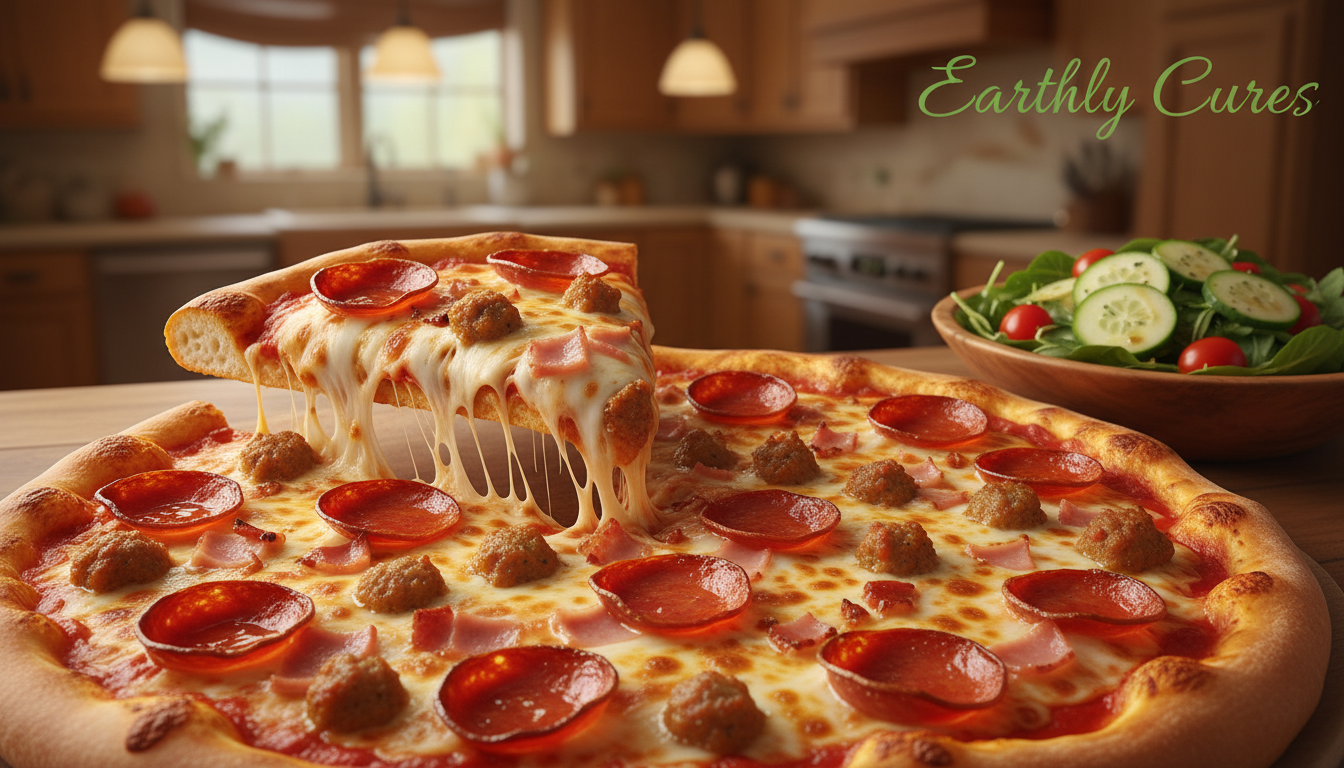
Surprising stat: one large slice can raise glucose faster than a brisk two-block walk drops it — and yes, I checked the receipts.
I once sat across from my pancreas like it was a judge. We’re not here for food-shaming. Life is messy and pizza is blissful, so let’s get practical.
Avoiding a blood sugar spike here means shrinking the size and the time of the rise, not turning you into a glucose wizard overnight.
This guide is for Type 1, Type 2, and caregivers who want real strategies. Meat-heavy pies are tricky because carbs, fat, and sodium team up for a plot twist.
I’ll walk you through crust swaps, topping tweaks, carb estimating, smart sides, timing, quick walks, and spot-checking patterns. We’ll cover ordering out and building better pies at home.
Your goal: more predictable glucose, not perfect control. Ready? Let’s make pizza work for your health — without turning it into a guilt spiral.
Key Takeaways
- Pizza can fit into life with diabetes when you focus on portion and balance.
- Small swaps cut spike size and duration: crust, toppings, and sides matter.
- Quick activity and timing help blunt post-meal rises.
- Personal monitoring makes responses more predictable, not perfect.
- This guide covers both restaurant orders and home cooking tactics.
Why pizza can be tricky for diabetes, but not off-limits
If pizza gives you pause, you’re not alone—most people with diabetes have that exact worry.
Yes, people with diabetes can eat pizza occasionally. This is not a prison sentence; it’s a planning assignment. One meal won’t erase weeks of progress. Patterns matter more than a single night.
Why is it tricky? The usual combo—refined crust plus heavy cheese and processed meats—pushes glucose fast and can drag digestion later. That mix makes monitoring feel like whack-a-mole.
Mindset matters
All-or-nothing thinking is a trap. “I already had one slice, might as well finish the box” turns a planned treat into a spike. Flexible structure works better: plan portion, pair with fiber or salad, and pick timing that fits your routine.
- Say it out loud: you can have favorite foods sometimes—strategies protect your health.
- Note that processed foods carry higher long-term risk for Type 2; that’s why “occasionally” is the vibe.
Next up: we’ll look at the sneaky timing effects that can hide a late rise on your meter—don’t check once and assume you got away with it, diabetes likes to surprise.
What happens to blood sugar levels after meat lovers pizza
Think of pizza as a food with split personality: quick opener, slow encore. First, the crust (often made with white flour) gets digested fast. That shows up as a quick jump on your meter. Then the cheese and meats — all that fat and protein — slow digestion and can drag carbs into your bloodstream later.
The fast rise from refined carbs like white flour
White flour has little fiber, so glucose appears fast in your blood. That early bump is the crust doing its thing. It’s usually the first peak within the first hour.
How fat and protein delay digestion and cause a later spike
Fat and protein slow stomach emptying. That means carbs keep arriving hours later. For many people, that delayed increase is bigger than the first one.
The “double spike” pattern seen in CGM trends
CGM users often see two peaks: a modest early rise, then a larger peak around 3–4 hours. This “double spike” matters for dosing and planning, especially if you use insulin.
Why pizza can hit harder at night
Evening insulin sensitivity drops and activity falls. Less movement plus lower insulin action makes late-night slices hit harder. Tip: expect unpredictability, check your levels at the early window and again a few hours later.
- Quick timeline: early crust bump, delayed fat/protein encore, possible double spike.
- Practical win: tracking these patterns makes your glucose more predictable — not perfect, but better.
How to Enjoy a Meat Lovers Pizza Without Spiking Blood Sugar
Treat this slice like a final boss level — you need a plan, not panic.
Start with a plan: crust, toppings, sides, and timing
Before you lift a slice, pick your portion and pair it. Choose a thinner or whole-grain crust when possible. Load on veggies and trade some processed meats for grilled chicken.
Add a fiber-rich side salad or steamed greens. That extra fiber and water slow absorption and blunt the quick rise from carbs.
Plan a short walk after the meal. Ten to fifteen minutes of movement nudges glucose down faster than staring at your phone.
A realistic goal: reduce the spike, don’t chase perfection
Success looks like a smaller peak, a shorter rise, and fewer surprises—not zero movement on your meter.
- Decide your portion before the first bite.
- Pick a smarter crust and balanced toppings.
- Include a fiber side and plan light activity.
| Strategy | Why it helps | Quick action |
|---|---|---|
| Smaller slice | Limits carbohydrate intake per meal | Plate one or two slices, box the rest |
| Veggies + salad | Adds fiber and volume | Eat salad first |
| Short walk | Boosts glucose uptake by muscles | 10–15 minutes after eating |
Choose a crust that steadies glucose instead of spiking it
Think of the crust as the carb delivery system — it does the heavy lifting here. Pick wisely and you cut the peak before the toppings even show up.
Thin crust vs. thick, deep dish, and stuffed varieties
More dough usually means more carbs per slice. Thin crust trims the carbohydrate load and gives you room for toppings without wrecking the meter.
Deep dish, thick crust, and stuffed crusts pack extra dough (and often extra cheese). If you love them, plan portion control or pair with a fiber-rich side.
Whole grain crust: what to look for beyond the label
Whole grain should mean higher fiber and real whole kernels listed first. But a thick slice can still be carb-heavy.
Check the ingredient list for refined flour or added starches. Look for grams of fiber per serving — higher is better.
Lower-carb crust options: cauliflower and almond flour
Cauliflower and almond flour crusts often lower carbs, but not always. Some commercial versions add starches or sugar.
Read ingredients and compare carb counts. Order with clear wording: “thin crust, regular sauce, no stuffed crust.”
“Choosing the base is half the meal plan — small changes here pay off later.”
| Crust type | Effect on carbs | Quick tip |
|---|---|---|
| Thin crust | Lower carbs per slice | Ask for thin and count slices |
| Thick / Deep dish | Higher carbs and calories | Share or box half before eating |
| Whole grain crust | More fiber if truly whole | Check fiber and ingredient order |
| Cauliflower / Almond flour | Often lower carb; verify label | Compare carbs and watch added starch |
Master the carbs per slice without guessing
Slice size is the plot twist that wrecks meal plans more often than toppings do. One restaurant’s slice can be a dainty triangle; another’s is basically a brick. That makes estimating carbs messy but not impossible.
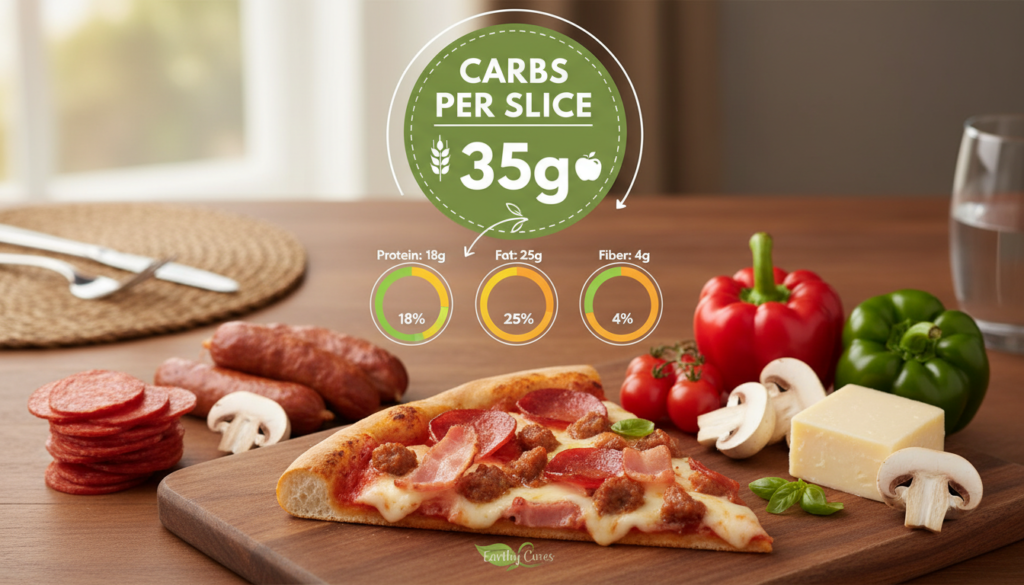
Practical rule: treat a standard triangle (~100g) as roughly 30g carbs. Two of those quickly land near 60g carbohydrates — and that’s before you factor crust thickness or extra toppings.
Estimating carbs when ordering from chains
Check online nutrition info first. If the chain lists per-slice carbohydrate content, use it. If not, pick the nearest match and adjust up for thick crust or specialty toppings.
- Thin crust: likely lower carbs per slice.
- Thick/stuffed: add 10–20g carbs per slice, sometimes more.
- Special toppings: some add more carbohydrate content than you expect (look for sweet glazes).
Why two slices can change the story
Two slices are often a deliberate decision, not an accident. More carbs mean higher blood sugar levels and a longer recovery window.
Caregiver tip: pre-portion on a plate and plan a short walk or a fiber-rich side. That way the extra intake is a planned move, not a surprise plot twist.
| Action | Estimate per slice | Quick adjustment |
|---|---|---|
| Standard triangle (~100g) | ~30g carbs | Use as baseline |
| Thick / deep dish slice | ~40–50g carbs | Box extras, eat one |
| Two slices | ~60–100g carbs | Pair with salad and brief walk |
Make meat lovers toppings work for diabetes management
That piled-high topping moment is basically a tiny deli counter crashed onto dough — delightful, messy, and worth a plan.
Quick truth: processed pepperoni, sausage, bacon, and ham pack extra saturated fat and sodium. They taste great, and they also nudge overall fat intake and can complicate later glucose patterns.
Limit processed slices and pick lean protein
Swap rather than ban. Choose grilled chicken or turkey as lean protein options that still feel meaty. Shredded chicken works great with herbs and a little red pepper flakes.
Add veggies for fiber, volume, and satisfaction
Pile on peppers, onions, mushrooms, and spinach. These veggies add bulk and slow absorption so you can feel full with fewer slices.
Cheese: balance satisfaction with saturated fat
Cheese brings comfort and slows digestion, but extra cheese raises calories and fat fast. Ask for regular cheese instead of “extra everything,” and watch overall sodium when dining out.
“Add, don’t just subtract — more veggies and a lean protein make the same slice work better for your health.”
- Keep one or two processed meats and bulk up with grilled protein.
- Choose a veggie combo that gives texture and fiber.
- Mind sodium and fat; small swaps yield big wins.
Pick sauces and seasonings that won’t sneak in extra sugar
Sauces can be the undercover agents of extra sweetness on your slice. You stare at crust and cheese, while the sauce quietly stacks carbs. That matters for anyone watching blood sugar and for people who just like predictable meters.
Red flags worth skipping
Barbecue sauce, sweet glazes, honey drizzles, and some sticky finishing sauces often list sugar high on the ingredients panel. Those add sudden carbs without looking like dessert.
Simple swaps that still taste like pizza
Default to plain tomato sauce when possible — ideally one with minimal added sugar. Herbs do the heavy lifting for flavor. Oregano, basil, garlic, and crushed red pepper add big taste and almost no sugar.
Restaurant trick: ask for sauce on the side if you’re unsure. You control the portion and avoid surprise carbs.
| Choice | Why it helps | Quick action |
|---|---|---|
| Plain tomato sauce | Lower added sugar vs. sweet sauces | Request no-sugar-added when available |
| Herb-forward seasoning | Boosts flavor with minimal carbs | Ask for extra oregano or basil |
| Sweet glazes / BBQ | High hidden sugar per serving | Skip or request on the side |
Balance the meal to blunt the blood sugar spike
Think of this meal like a team sport: fiber plays defense and carbs are the forward. Let the plate work for you. Start with foods that slow absorption and you’ll get fewer surprises on the meter.
Start with fiber: salad, leafy greens, and non-starchy veggies
Eat the salad first. A quick bowl of greens, peppers, and cucumbers gives real volume without many calories.
Salad ideas that aren’t sad: Caesar-ish with light dressing, Greek salad, or spinach tossed with olive oil and vinegar. Add olives or tomatoes for punch.
Add protein on the side when the pizza is heavy on carbs
If your slice leans carb-heavy, bring in protein. Grilled chicken, turkey strips, or even a small pot of Greek yogurt dip helps slow absorption.
Smart drink choices to avoid extra sugar
Drinks can wreck the plan. Soda, sweet tea, and fruit juice add sugar fast. Pick water or sparkling water and sip.
Build-a-plate method: salad first, one measured slice, side protein, water. Simple, realistic, and kind to Future You.
- Why it works: fiber slows carb absorption and makes blood sugar more predictable.
- Quick swap: bulk up with salad, not extra slices.
- Busy life hack: buy pre-washed greens and rotisserie chicken for fast assembly.
Portion strategies that still feel satisfying
One honest slice can feel tiny—until your meter tells a different story. Portion size drives carbs and often calories, so planning the amount you’ll eat is the real power move.
What “one to two slices” can look like in real life
Real-world slice scenarios
A big New York triangle can be the size of your forearm. That one slice might carry the carbs of two smaller party slices. Two of those giant pieces is a serious carb hit for any meal.
Small party slices are lighter, but the math changes if you snack while standing. Plate your portion and close the box like an adult raccoon (I say this with love).
Slow down so fullness signals catch up
Eating slowly helps your brain and stomach sync. Put the slice down between bites. Sip water. Talk to the humans at your table. These little moves cut the chance of unplanned extra slices.
- Simple pacing tips: sip water, set the fork down, breathe between bites.
- Portion hack: plate one or two slices and box the rest before you start.
- Quick reminder: more slices usually mean more calories and more carbs — which affect your blood sugar levels.
You’re allowed to be satisfied: the goal is “enough pizza,” not “no pizza.”
Timing and activity hacks that help glucose stay steadier
Timing can be the secret handshake between your meal and steady glucose. Your body often handles carbs better earlier in the day, so that same pizza at lunch may behave more politely on your meter than at night.
Why nights can be tougher: insulin sensitivity falls in the evening and you’re usually more sedentary. That combo makes sugar levels climb higher and stay up longer after a late meal.
Simple timing tip: choose lunch or an earlier dinner when you can. If evenings are your only option, plan small swaps: thinner crust, more veg, or one measured slice and a salad.
The 10–15 minute walk that actually works
The easiest glucose hack isn’t brutal. A 10–15 minute walk after the meal nudges muscles to use glucose and often lowers post-meal levels.
- Around the block? Perfect.
- Walk the dog or pace during a phone call.
- Take a mall lap like it’s 1997 and you’re window-shopping.
Note: you don’t have to “earn” the pizza. The walk is a gentle tool for steadier levels, not penance. Make it a ritual—pizza night plus walking beats panic and guessing any day.
How to monitor your blood sugar after pizza (and learn your pattern)
Treat post-pizza checks like detective work: short, focused, and not judgmental. You want useful data, not a stress spiral.
Two quick checks work best: one in the early window (about 1–2 hours after eating) and another in the delayed window (around 3–4 hours). Pizza often shows a small early rise then a larger delayed uptick because of fat and protein.
What CGM users should watch
Look at trend arrows and recent slope, not just the number. A steady climb after the first hour hints at a delayed peak. If you see a rising arrow at 2 hours, expect another bump later—adjust activity or insulin plans later, not immediately.
Simple fingerstick plan for non-CGM folks
Do one check at ~90 minutes and another near 4 hours. That gives you the same two windows without constant poking. Log the results with what crust, toppings, and portion you had.
Why results shift from night to night
Stress, poor sleep, and low activity can raise baseline glucose and amplify spikes. Same slice, different life conditions = different readings.
Reminder: data is useful, not a grade. Track patterns — crust, toppings, portion, and time — and you’ll make future nights more predictable.
| Check timing | What you learn | CGM cue | Quick action |
|---|---|---|---|
| 1–2 hours | Early crust-driven rise | Initial upward arrow | Light walk or note insulin timing |
| 3–4 hours | Delayed fat/protein spike | Second peak or sustained climb | Consider late correction if safe |
| Pattern log | Repeatable response for future meals | Consistent double-spike trend | Adjust portion or timing next time |
Insulin and medication considerations for Type 1 and Type 2
Some meals behave like sprint races; pizza is more of a relay with shifts in pace and timing. That matters when you’re dosing insulin or managing meds for diabetes.
Why pizza can require a different approach than simpler carbs
Fat and protein slow digestion, so the early crust-driven carb hit may be followed by a later rise in glucose. That delayed climb can surprise you hours after the meal.
In plain terms: a simple carb like toast spikes fast and fades. This meal often gives two waves because protein and fat change the absorption timeline.
When to loop in your clinician or dietitian for personalized adjustments
If you have type diabetes and use insulin, ask your clinician about extended bolus options or timing changes rather than guessing. For people with type diabetes managed with pills or injections, patterns of late rises may mean adjustments in meds or activity.
Track intake, portion, and time of checks. Bring that log to your care team. They’ll help you tailor dosing safely.
Safety note: this is educational, not medical advice. Don’t change insulin or medication without your clinician or registered dietitian.
Ordering meat lovers pizza at restaurants without losing control
Ordering out shouldn’t feel like defusing a bomb; use simple lines and you’ll eat with less guesswork. I’ve got a few exact phrases you can borrow so you don’t freestyle under pressure.
Customization wins:
- “Thin crust, please, and light cheese.”
- “Extra veggies—mushrooms and peppers—swap one processed meat for grilled chicken.”
- “Sauce on the side and no stuffed crust, thanks.”
Those requests sound picky but they’re short and clear. They cut carbs and saturated fat without killing the vibe.
Sodium matters: restaurant pizza often comes very salty. If you have blood pressure concerns, ask about ingredients and consider sharing or choosing a smaller size.
Quick ordering script for crowded tables: say the crust choice, ask for half the cheese, request veggies, then add “sauce on the side.” Done.
“Share one pie and add a side salad and water—tastes complete and keeps the meal predictable.”
Choosing frozen pizza that’s more diabetes-friendly
The freezer aisle sells convenience, not magic; your meter still gets a vote.
Label basics that actually help
Frozen pizzas are often ultra-processed. That means refined carbs, extra sodium, and higher saturated fat in many brands.
Quick checklist: aim for 3–5g of fiber per serving, low added sugar, moderate fat, and reasonable sodium on the nutrition panel.
Why some cauliflower crusts still behave badly
Cauliflower crusts can be lower in carbs — or not. Some versions add refined starches and binders that act like regular flour.
That sneaky starch inflates carbohydrate content and can raise your blood sugar similar to a traditional crust. Read the ingredient list, not just the picture.
Easy at-home upgrades after you buy
Bake the pie, then make it smarter:
- Top with fresh spinach, mushrooms, or roasted peppers for extra fiber.
- Add a big salad on the side so one or two slices feel like a meal.
- Skip sweet sauces and watch that added sugar line on the label.
Portion tip: plate one or two slices and stash the rest before appetite fog sets in — yes, you will thank Future You.
“Frozen is fine — just be the person who reads the label and adds the salad.”
Make a diabetic-friendly meat lovers pizza at home
Want predictable meters? Start in your kitchen, not the takeout app. Making pizza at home is the power move: you pick the crust, sauces, toppings, cheese, and slice size.
Build a better base with cauliflower or almond flour pizza crust
Swap the usual dough for cauliflower or almond flour crust and you cut carbs and get steadier numbers. Some store crusts hide starches, so check ingredients.
Choose a lower-sugar sauce and control the cheese
Pick a plain tomato sauce with low or no added sugar and load herbs for flavor. Use regular cheese rather than extra—enough for satisfaction, not an avalanche of saturated fat.
Create a “lighter meat lovers” topping combo with lean meats
Lean protein wins: grilled chicken, turkey sausage, or small amounts of Canadian bacon. Bulk up with mushrooms, peppers, and onions for fiber and volume.
Meal prep tips for busy weeknights
Pre-cook chicken, chop veggies, portion cheese, and stash crusts in the fridge. That makes making pizza quick and keeps takeout temptation low.
“Control the knobs: base, sauce, cheese, toppings, and portion — then eat with confidence.”
| Strategy | Why it helps | Quick action |
|---|---|---|
| Cauliflower or almond crust | Lower carbs than traditional dough | Buy ready crusts or make one batch on Sunday |
| Low-sugar sauce | Prevents hidden carbs | Use no-sugar-added canned tomatoes + herbs |
| Lean toppings | Less fat, steady protein | Swap pepperoni for grilled chicken or turkey |
| Prep and portion | Makes weeknight meals doable | Cook proteins, chop veggies, pre-portion slices |
Conclusion
Conclusion
Final note: pizza can fit in your life without turning every meter reading into a mystery. Focus on smarter crust choices, measured portions, balanced sides, and a short walk after the meal.
Remember the delayed rise is real — check once in the early window and again a few hours later so your patterns become useful data, not surprises.
Small goals win: pick one or two changes for your next night (thin crust + salad, or a post-meal walk) and make that your experiment.
For medication or insulin changes, talk with your clinician or dietitian first. You deserve tasty moments and steadier glucose — yes, both can exist.